
ShipSpace: Unlocking the Hidden Economy of Empty Cargo

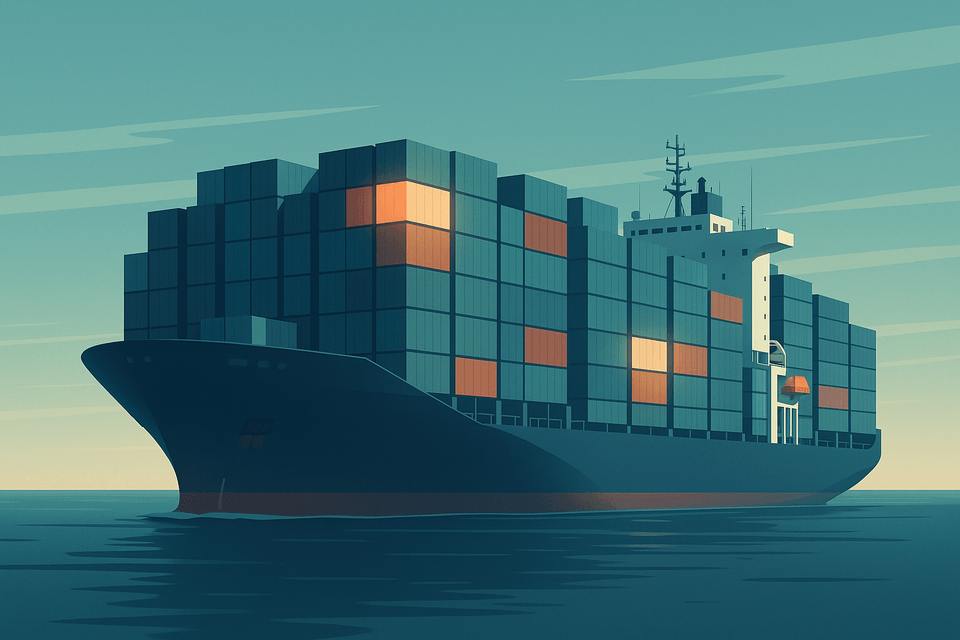
Every year, millions of steel containers set sail across the oceans carrying the goods that fuel our modern lives—electronics, furniture, machinery, clothing. The image is one of efficiency and scale: container ports buzzing, ships stacked sky-high, supply chains in motion. But behind the spectacle lies a hidden truth—many of those containers are not full.
The shipping industry has always worked in terms of absolutes: you either book a full container load (FCL) or you negotiate a less-than-container load (LCL) through a freight forwarder. Both models have their flaws. Companies that book FCL often overestimate their needs, leaving wasted cubic meters of space. Smaller importers, meanwhile, are priced out of FCL and stuck with costly, inflexible LCL services.
This inefficiency costs billions every year. It inflates prices, ties up capital, slows down trade, and burns unnecessary fuel. Empty space, paradoxically, becomes one of the most expensive commodities in global commerce—paid for but unused, sailed but unproductive.
But what if there was a way to turn that wasted space into opportunity?
That’s where the idea of ShipSpace comes in: a matchmaking platform that connects those who have empty space in their containers with those who need affordable shipping. Think Uber or Airbnb, but for global freight—a way to transform inefficiency into shared value: lower costs for businesses, new revenue for shippers, and a greener footprint for everyone.
How It Works
The brilliance of ShipSpace lies in its simplicity. It doesn’t reinvent the wheel—it just makes better use of the wheels already turning.
Step 1: Listing the Space
When a company books a container for international shipping, they rarely fill it to the last cubic meter. Maybe they’re a mid-sized business importing 70% of a container’s worth of goods from Shenzhen to London. Traditionally, that remaining 30% of space is lost—paid for, but wasted.
With ShipSpace, that company can list their available capacity in real time. Instead of a closed system, every container becomes part of a shared network where unused space is visible and accessible. Dimensions, weight limits, departure dates, and destinations are all logged automatically through integration with existing shipping platforms.
Step 2: Matching the Cargo
On the other side of the marketplace is the smaller shipper: an entrepreneur ordering ten pallets of kitchen appliances from Alibaba for their Amazon FBA business in the UK. Normally, their choices would be frustrating: pay a premium for LCL shipping with long processing delays, or rent a half-empty container at a steep cost.
Instead, they input their shipment dimensions directly into ShipSpace. This can be done manually—or, more powerfully, integrated seamlessly at checkout from Alibaba or AliExpress, where package size and weight are already known. Within seconds, the matchmaking engine scans the network and identifies containers traveling to the same port with spare capacity.
Step 3: The Matchmaking Engine
This is the beating heart of ShipSpace. Much like Uber finds the nearest driver or Airbnb surfaces the perfect spare room, ShipSpace matches cargo with container space. The algorithm factors in:
-
Route compatibility — ensuring both shipments share the same origin/destination corridor.
-
Size & weight constraints — verifying that the cargo physically fits.
-
Timing — aligning delivery deadlines for both parties.
-
Price optimization — balancing affordability for the cargo owner with cost recovery for the container holder.
Once a match is made, ShipSpace facilitates payment, tracking, and insurance, ensuring both parties operate with transparency and security.
Step 4: Shared Value in Motion
The result? The container that would have sailed with 30% dead space now leaves port fully optimized. The original contractor earns back part of their shipping cost. The smaller importer gains access to international shipping at a fraction of the usual price. And the ship itself carries more per voyage—saving emissions and reducing the need for redundant trips.
In other words, ShipSpace is not about moving more containers. It’s about moving smarter, fuller, greener containers.
Why ShipSpace?
The logic of ShipSpace is straightforward, but the implications ripple across finance, commerce, and sustainability. Its value can be understood on three levels: cost efficiency, operational flexibility, and environmental impact.
1. Cost Efficiency: Turning Waste Into Value
In global trade, shipping costs often make or break margins. For smaller businesses, these costs can feel like a gatekeeper, locking them out of certain markets. For larger firms, inefficiency simply eats into profits.
-
For container holders: unused space is pure loss. You’ve already paid for the container, the customs paperwork, and the freight charges—whether it’s 70% full or 100%. ShipSpace converts that loss into revenue. Even modest cost recovery adds up when multiplied across thousands of containers.
-
For cargo senders: buying a sliver of space through ShipSpace means avoiding the high premiums of less-than-container-load (LCL) shipping. Instead of paying for administrative overhead and middlemen, they pay only for the cubic meters they need.
The effect is a win-win: one side monetizes waste, the other lowers barriers to entry.
2. Flexibility: Logistics for the Many, Not the Few
Traditional shipping favors scale. The bigger the order, the cheaper the unit cost. But this “economy of scale” has long excluded small businesses and entrepreneurs who can’t fill entire containers.
ShipSpace changes that dynamic. It introduces modular logistics:
-
A startup can ship goods without waiting months to accumulate enough demand for a container.
-
A growing business can test new products in new markets without overcommitting on shipping.
-
Even individuals—say, someone moving abroad—could tap into ShipSpace to move a few cubic meters of personal belongings at lower cost.
By transforming container shipping into something scalable down to the pallet, ShipSpace democratizes global trade.
3. Environmental Impact: Full Containers, Fewer Ships
The shipping industry accounts for roughly 3% of global greenhouse gas emissions—more than the entire aviation sector. Much of that comes from inefficiency: half-empty containers, fragmented routes, redundant trips.
ShipSpace addresses this directly:
-
Every extra cubic meter filled is one less wasted.
-
Fewer half-empty containers mean fewer total voyages over time.
-
Better optimization reduces the pressure to build ever-larger fleets.
The impact is not symbolic—it is measurable. If ShipSpace scaled globally, the reduction in wasted container space could slash millions of tons of CO₂ annually. It would be one of those rare solutions that benefit the bottom line and the biosphere at once.
4. Systemic Benefits: A More Resilient Supply Chain
Beyond cost and carbon, ShipSpace also adds resilience to a system that has shown its fragility in recent years. Pandemic disruptions, port delays, and geopolitical shocks revealed how brittle global trade really is. By pooling and sharing container capacity, ShipSpace introduces liquidity into logistics—making it easier for goods to move even when systems are stressed.
In effect, it becomes a kind of marketplace for resilience.
ShipSpace is not just cheaper shipping. It is fairer, smarter, greener shipping.
A Scenario in Practice
Sometimes the best way to understand a system is to walk through it step by step. Let’s imagine two different versions of the same story: a small UK business sourcing goods from China to sell on Amazon FBA.
The Old Way: Limited Choices, High Costs
Emma runs a small homeware brand in Manchester. After months of design work, she places her first bulk order of 10 pallets of kitchenware through Alibaba. Excited, she quickly discovers the logistical problem that many small businesses face: shipping.
-
Option 1: Book a full container. The smallest standard container is 20 feet long. Emma’s 10 pallets only fill about 60% of it. The rest is empty space—expensive, wasted cubic meters. She pays thousands more than necessary, eroding her margins before her goods even leave port.
-
Option 2: Use LCL (less-than-container load). Emma tries a freight forwarder, but quickly learns about the trade-offs. Her cargo will be consolidated with shipments from multiple other businesses. This takes time, adds extra handling, and often leads to delays at both origin and destination ports. Worse still, LCL comes with higher per-unit costs and less transparency.
Either way, Emma is forced into an inefficient system designed around volume, not fairness.
The ShipSpace Way: Efficiency Through Sharing
Now, let’s imagine ShipSpace exists. When Emma checks out on Alibaba, she sees a new option: “Ship via ShipSpace.”
-
The dimensions of her 10 pallets are automatically fed into the matchmaking engine.
-
Within seconds, ShipSpace identifies a container already booked by a larger importer, headed from Shenzhen to Felixstowe, with 40% of its space unused.
-
Emma sees the price—significantly cheaper than LCL—and a delivery window that matches her needs. She books.
On the other side, the original container holder, perhaps a mid-sized electronics distributor, recoups part of their shipping cost by monetizing what would otherwise be wasted space. Both sides benefit.
When the container departs, Emma’s kitchenware rides alongside electronics, all tracked under ShipSpace’s platform. She can monitor progress, share tracking data with her FBA warehouse, and rest assured her cargo is insured.
What once felt like a punishing cost now feels like smart collaboration.
Scaling the Impact
Now multiply Emma’s story by tens of thousands. Across Alibaba sellers, Amazon FBA entrepreneurs, small retailers, and even individuals moving goods internationally, the system scales. Suddenly, the supply chain looks different:
-
Fewer empty containers.
-
Lower costs for small players.
-
New revenue streams for larger ones.
-
A measurable dent in global shipping emissions.
It’s not science fiction. It’s logistics reimagined through sharing.
The Future of Shipping is Shared
Global trade has always thrived on scale. The bigger the shipment, the lower the cost per unit; the larger the fleet, the more competitive the carrier. For decades, this logic has been accepted as natural law. But ShipSpace suggests something different: that scale doesn’t have to mean exclusion, and efficiency doesn’t have to come at the expense of flexibility.
In a sense, ShipSpace represents the next step in the evolution of logistics. Just as Uber unlocked the value of idle cars and Airbnb unlocked the value of spare rooms, ShipSpace unlocks the hidden economy of unused cargo space. What once looked like waste is suddenly revealed as opportunity.
-
For businesses: it lowers barriers to entry. Even the smallest entrepreneur can ship internationally without being punished for lack of volume.
-
For container holders: it transforms sunk costs into revenue, smoothing margins and increasing profitability.
-
For the planet: it reduces unnecessary voyages, lowers emissions, and creates a culture of optimization rather than excess.
This isn’t about moving more goods. It’s about moving smarter, fuller, greener.
And the real shift is cultural. ShipSpace reframes shipping not as a zero-sum contest between giants and minnows, but as a collaborative marketplace where every cubic meter has value. In doing so, it democratizes access to trade and rebalances the scales of globalization.
In a world of rising costs, fragile supply chains, and mounting environmental pressure, ShipSpace offers a simple, radical truth: the space we waste is the space we can save.