
Economy & Finance

Liquidity, incentives, cycles and risk — how value is created, transferred and sometimes destroyed.

Page 1 of 4

RSS feed
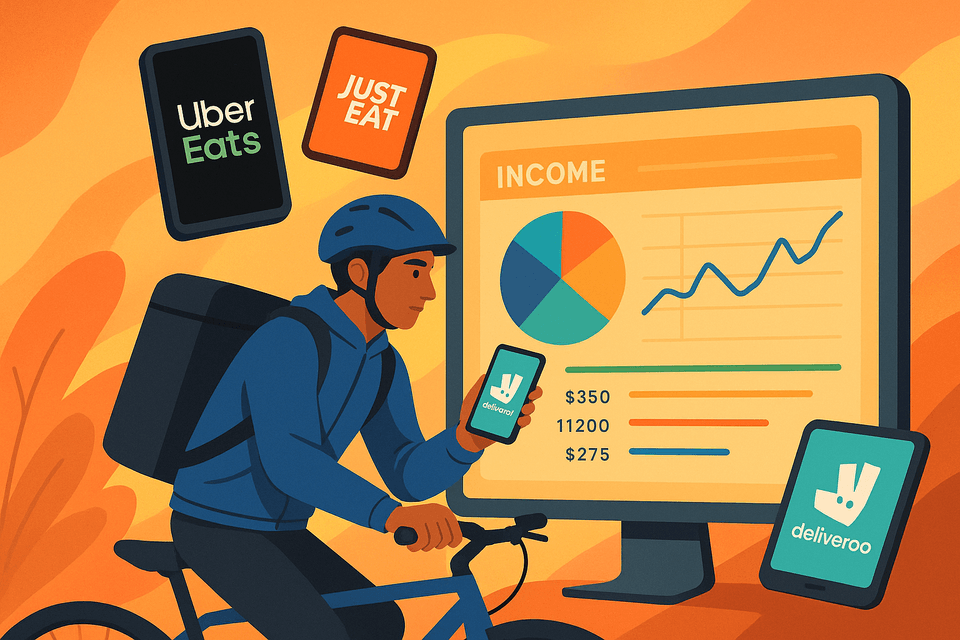
Illustration of a gig worker surrounded by delivery apps and income charts on a dashboard

Income in Motion: Introducing GigFin

An introduction to GigFin, a free and open source income tracking app built for gig workers navigating multiple platforms and seeking clearer insight into their earnings.

Abstract illustration of dollar tokens flowing through pipes and balance sheets, with sections lit up for easing and dimmed for tightening

The Dollar as Token, Part II: Quantitative Easing, Tightening, and the Dollar’s Burn Mechanism

Exploring how quantitative easing and tightening reshape the dollar’s balance-sheet architecture, and how taxation functions as a burn mechanism within a fiat token system.

Digital dollar tokens dissolving into abstract burning fragments, symbolising taxes reducing the money supply

The Dollar as Token: Rethinking Taxes in a Fiat Age

In a post–gold standard world, the US dollar behaves less like a claim on scarce metal and more like a state-issued token—making taxes less about “funding” government and more about burning tokens to manage inflation and anchor demand for the currency.

Abstract illustration of repeating historical patterns across time

The Rhythm of History

A meditation on the cyclical rhythm of history—how moments like 1918, 1920, and 1929 reveal repeating human patterns of crisis, forgetting, and consequence, and what it would mean to truly learn from them.

A pound coin casting a clockface shadow—time value of money

The Price of Time: Opportunity Cost and the True Value of Money

Time changes value, and every choice carries a “compared to what?”—a lens that links the time value of money, opportunity cost, and discount rates to real decisions in life and business.

Abstract geometric ladder illustrating asset → price → ledger → protocol → power across a muted, system-like landscape.

The Transactionalization of Everything

A practical lens (T5) for seeing the transactional rails beneath modern life—Asset, Price, Ledger, Protocol, Power—and for designing humane counters: thick consent, commons-first systems, and dignity-preserving friction where it matters.

Abstract finance-themed cover: dark background with wavy price curves, upward and downward arrows, Greek letters β and λ, the CAPM-style fraction (Rp–Rf)/βp, and the words “Contango” and “Backwardation” alongside a triangle—evoking risk, term structure, and momentum.

Decoding Market Jargon: Common Terms Every Investor Should Understand

Markets speak their own language — full of ratios, Greeks, and curious words like backwardation or contango. This guide breaks down some of the most common (and misunderstood) terms used in trading and investment circles.

7m
Glowing orange ring encasing a teal triangle and square, with rainbow market waveforms (RSI/Stochastic/MACD-like) and a faint histogram over a dark blue, star-speckled grid.

The Self-Fulfilling Prophecy: Psychology, Markets, and the Mechanics of Belief

Markets, like minds, move not only on facts but on expectations. The self-fulfilling prophecy shows how shared beliefs turn into order flow, liquidity events, and ultimately the prices that seem to “confirm” those beliefs.

Abstract dark-teal market graphic with a glowing orange ring, a stepped price line, and a sweeping ribbon—evoking flow, liquidity, and weekend gaps.

Daily vs Weekly Market Closes: Mechanics, Gaps, and Why They Matter

The “close” is a mechanism, not just a timestamp. This essay explains how daily and weekly closes differ in auction/settlement, liquidity, and halt structure—why that creates gaps, and how those gaps behave across futures, FX, and crypto.

48m
Cover artwork (cover.png) for the article titled Investing vs. Trading: Two Paths Through the Market.

Investing vs. Trading: Two Paths Through the Market

Investing and trading aren’t opposites so much as different relationships to time. This guide clarifies frames—from scalping to position trading—and argues that most edge is born in ranges, not headlines. Choose your horizon, respect its rules, and let discipline—not drift—set your course.

13m
© 2025 Valeon. All rights reserved.