

The Fold in Space
The distance to Andromeda has not changed. But if the universe is folded in higher dimensions, it may never have been the obstacle we assumed — a journey through topology, Kaluza-Klein theory, wormholes, and the Alcubierre metric.
Reason as a living process — logic, metaphysics, epistemology and meaning in everyday life.
Page 1 of 10
RSS feedThe distance to Andromeda has not changed. But if the universe is folded in higher dimensions, it may never have been the obstacle we assumed — a journey through topology, Kaluza-Klein theory, wormholes, and the Alcubierre metric.

Most of us act from the surface emotion — the anger, the contempt, the withdrawal — without ever reaching what sent it up. Learning to distinguish primary from secondary emotions is not just a tool for self-knowledge; for many, it is the beginning of understanding themselves for the first time.

An essay on why contemplation matters in an age of metrics—how models, measurements, and proxies shape what we believe, and why humility, calibration, and discernment are prerequisites for progress.
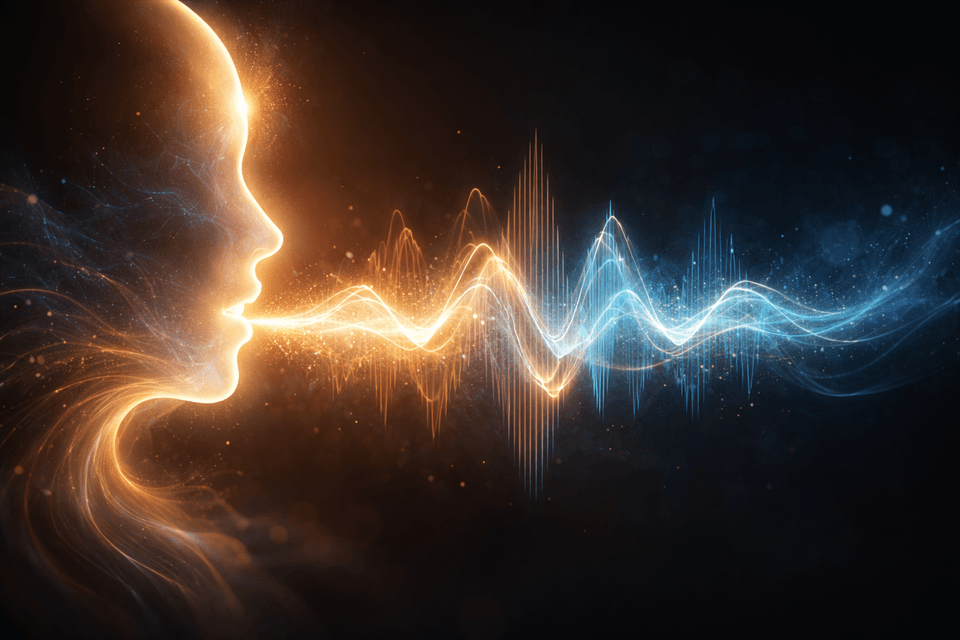
When a voice can be generated on demand, presence becomes an output—and trust becomes a commons to protect. An essay on the Cartesian “I,” the inner monologue, and what it means to sound human.

An exploration of how perception renders pocket realities, why the universe arrives in layers, and what “parallel worlds” can mean—from quantum branches to the worlds we carry inside our minds.

Contact feels like the simplest fact of life, yet physics suggests it’s an emergent interface: a boundary rendered by fields, constraints, and collective behavior. What we call touch is reality, compressed.
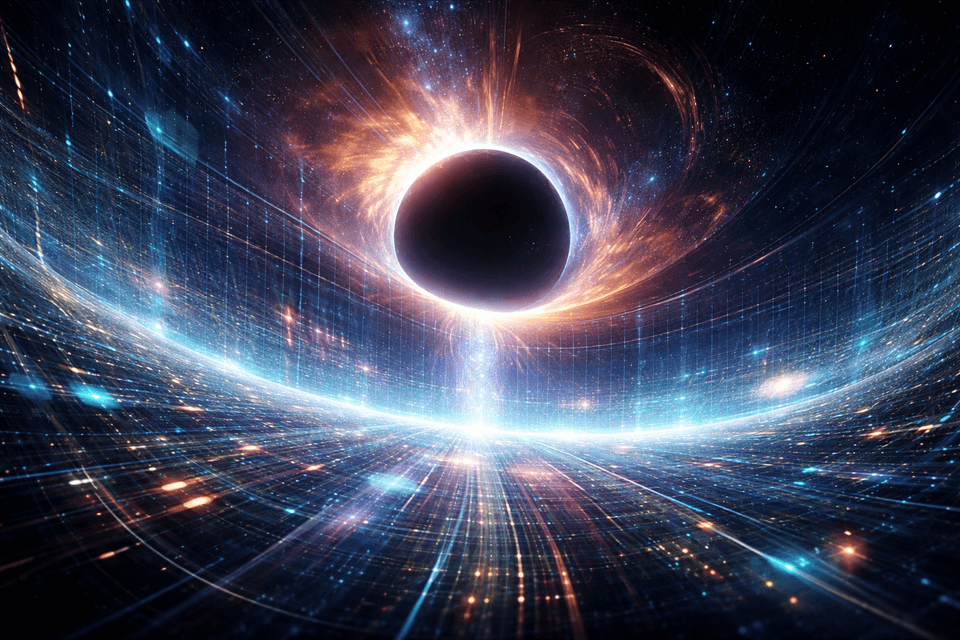
A philosophical walk through the holographic principle—how black holes hint that information scales with surface area, and what that might imply about emergence, time, and causality.
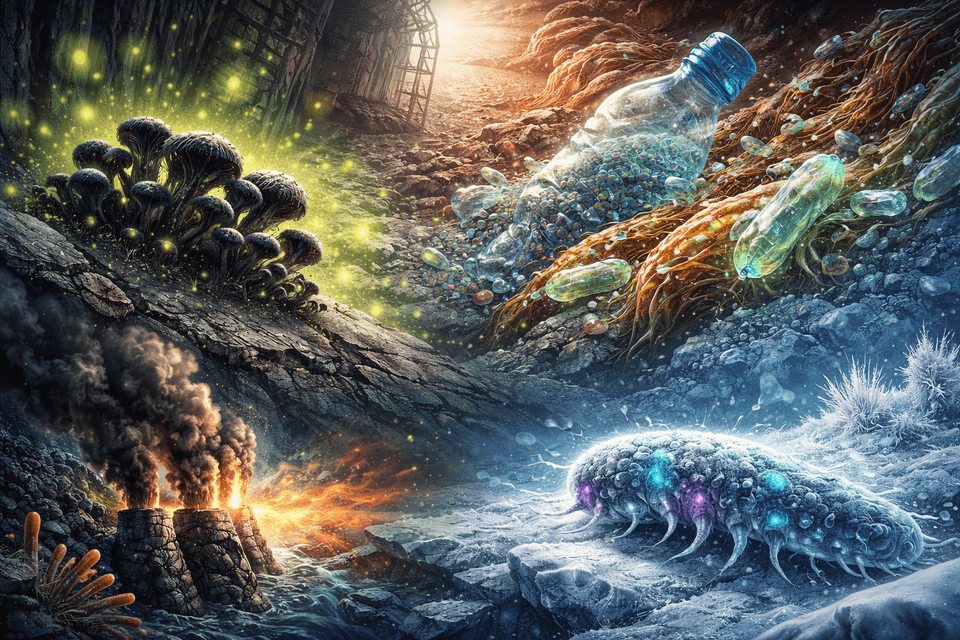
From melanized fungi growing in Chernobyl’s radioactive ruins to bacteria learning to break down plastics and microbes thriving in scorching vents and subzero ice, this essay explores how life keeps finding a way—by adapting, specializing, and rewriting the boundaries of “habitable.”
Why “under promise, over deliver” is less a tactic than a philosophy of trust—and how reliability is remembered as a feeling long after details fade.

A meditation on how water, trade routes, and the physics of movement shaped where cities formed—and how the human body itself quietly authored the logic of streets, corridors, and built space.
