
The Human in the Equation
A reflection on how human experience—memory, agency, language, and narrative—shapes the frameworks we build, and what that means for time, causality, and the limits of physics as a “mirror” of reality.
Page 1 | 10 posts
Posts tagged "Philosophy of Science".
A reflection on how human experience—memory, agency, language, and narrative—shapes the frameworks we build, and what that means for time, causality, and the limits of physics as a “mirror” of reality.
An essay on why symmetry comforts the mind, how science and mathematics chase invariance, and why asymmetry—through breaking, chirality, primes, and time’s arrow—is the texture that makes life and meaning possible.
Perception is not raw reality but a construction shaped by biology, memory, and belief. From the science of color to the mysteries of synesthesia, this essay explores how our worldview frames what we see, hear, and know.

Before physics was an equation, it was a question. This essay traces its roots—from myth and wonder to natural philosophy—as humanity’s first attempt to read the book of nature.

Beneath every grand theory lies a quiet lattice of first principles and lemmas. This essay explores the bedrock and bridges of reasoning—and why inhabiting a school’s foundations matters more than memorising its slogans.
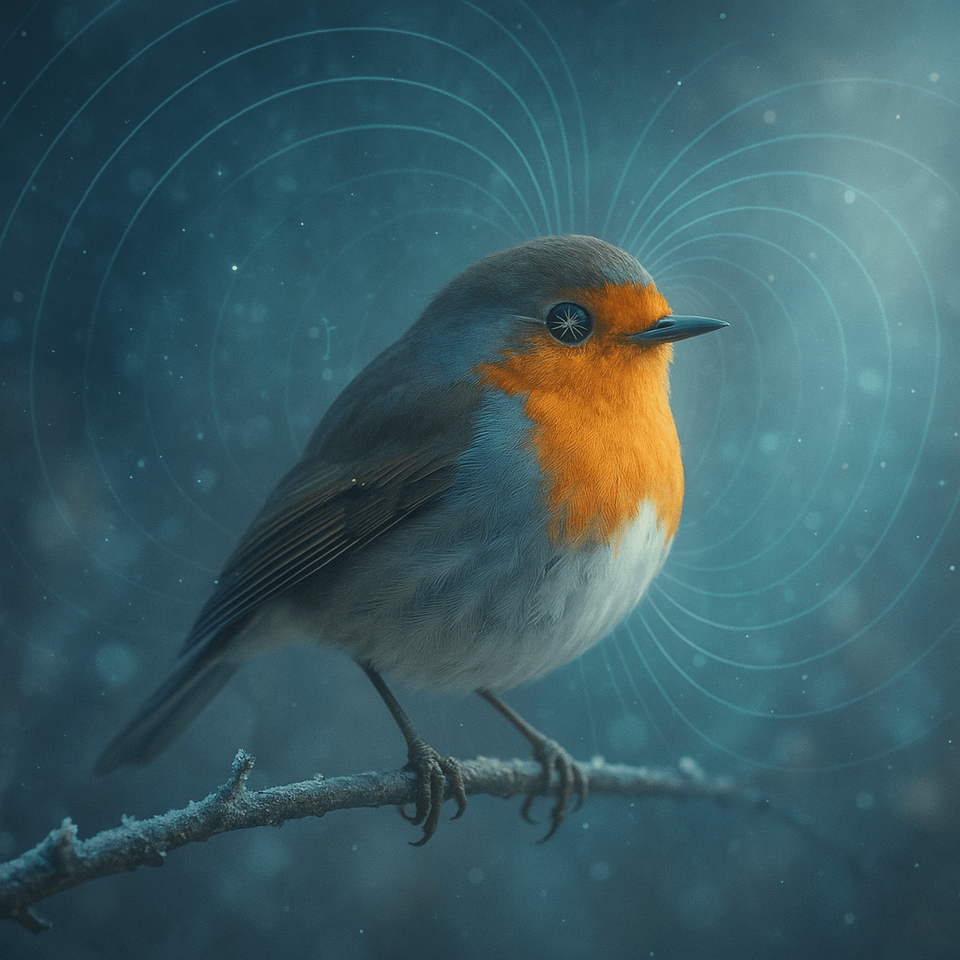
A European robin “sees” Earth’s magnetic field through quantum effects in its eye—an elegant bridge between physics and life. This essay follows how cryptochrome, radical pairs, and entanglement helped launch quantum biology and reframes what it means to navigate.
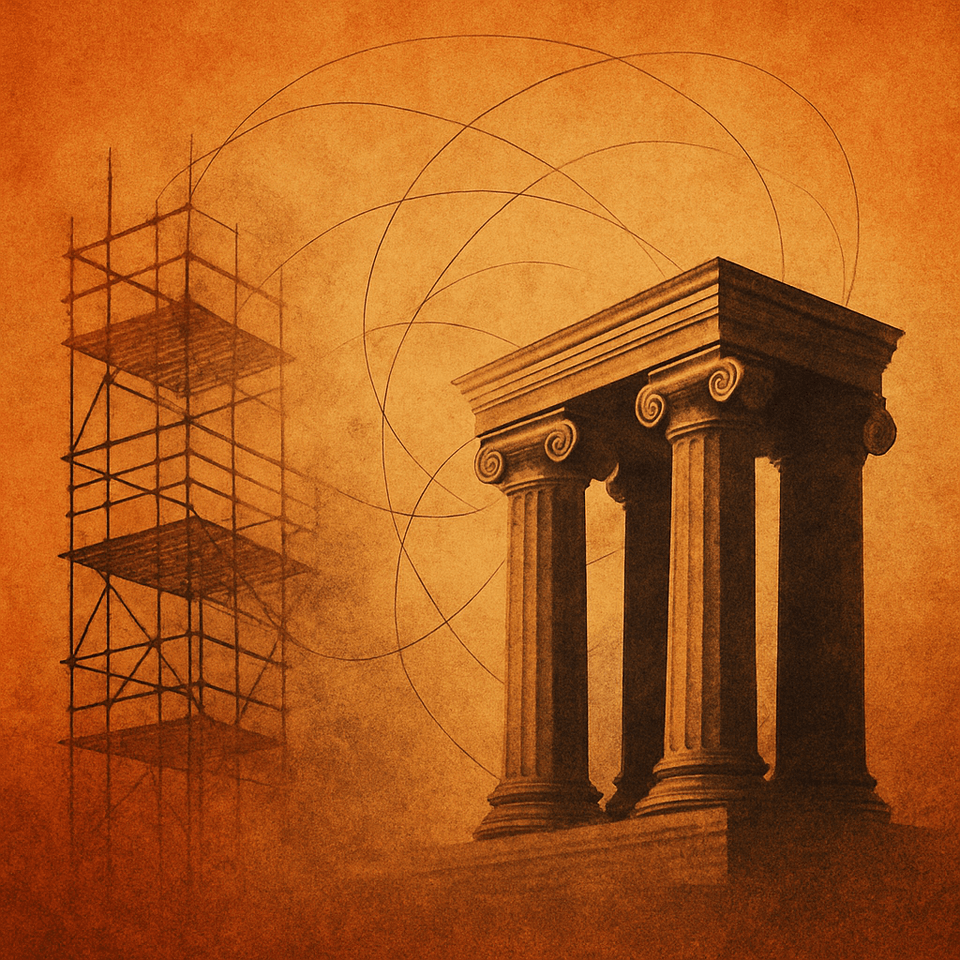
We trust science, law, and society for their apparent rigour — but beneath the surface lie hidden assumptions and convenient fictions mistaken for certainty. This essay explores how social apriories shape our systems of knowledge, from physics and medicine to the courtroom, revealing that what feels like stone is often only scaffolding. The task is not to discard these illusions, but to see through them with humility and discernment.
Why does our universe exist in matter, when physics tells us it should have been born in perfect balance with antimatter? From CPT symmetry to Feynman’s vision of particles moving backward in time, from Penrose’s maps of spacetime to Hawking’s idea of imaginary time, the mystery deepens. This essay explores a radical possibility: that antimatter was never lost, but displaced into a shadow universe, unfolding along a different rhythm of time. Could this hidden twin still whisper across the folds of spacetime — perhaps even reaching from tomorrow into today?
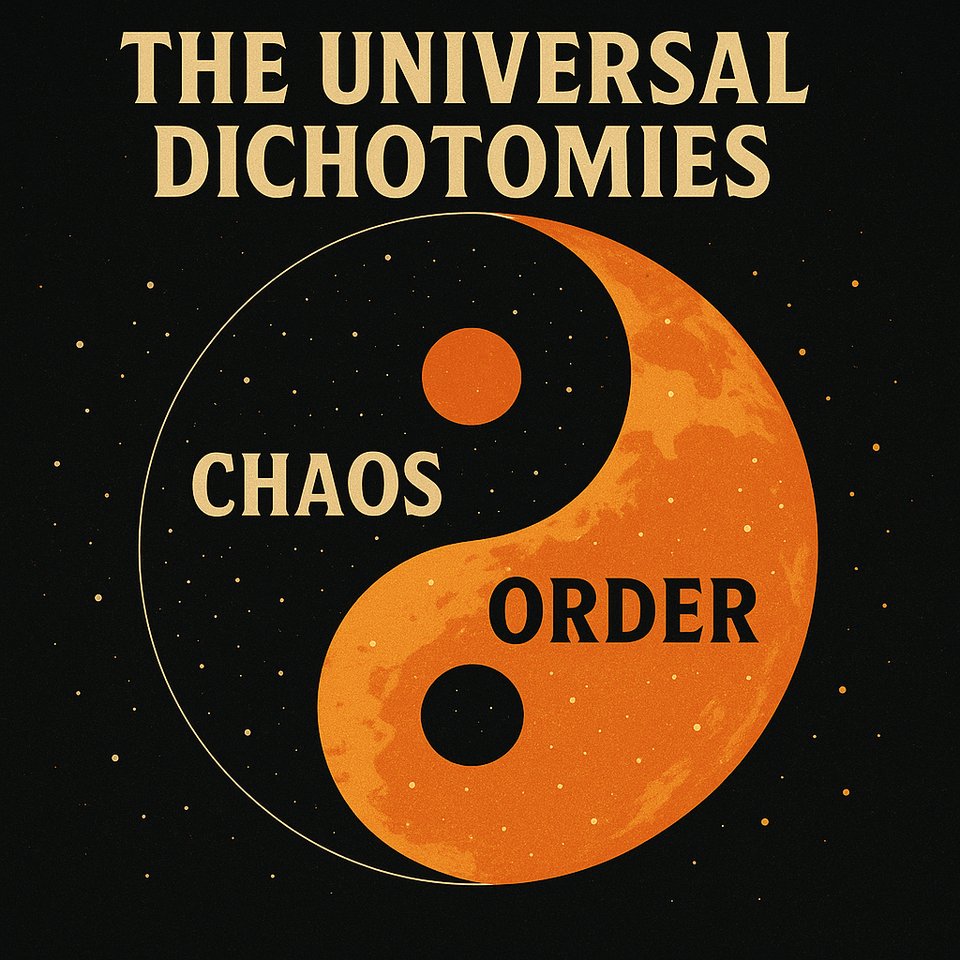
In this post, we explore the fascinating interplay between chaos and order, showing how the conservation of information, entropy, and the rise of complexity shape both the universe and human consciousness — revealing what I call the Universal Dichotomies.
In a world where facts are debated, belief systems clash, and identities multiply, the question of truth is no longer a philosophical luxury—it’s a daily necessity. We often speak of truth as if it’s a singular thing: something out there waiting to be discovered, like a hidden treasure buried beneath the noise. But truth is
