
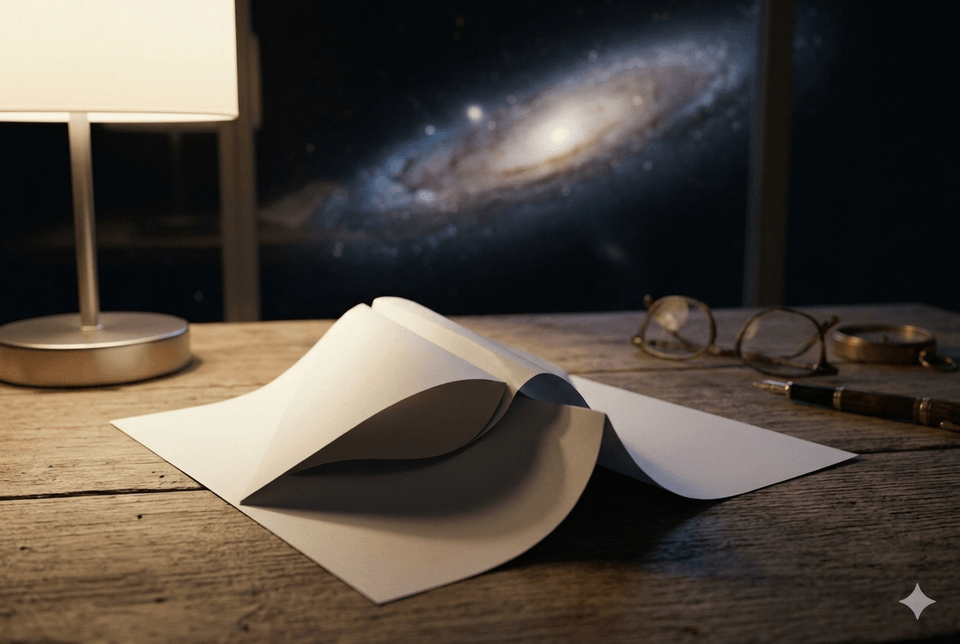
The Fold in Space
The distance to Andromeda has not changed. But if the universe is folded in higher dimensions, it may never have been the obstacle we assumed — a journey through topology, Kaluza-Klein theory, wormholes, and the Alcubierre metric.
Page 1 | 4 posts
Posts tagged "Spacetime".
The distance to Andromeda has not changed. But if the universe is folded in higher dimensions, it may never have been the obstacle we assumed — a journey through topology, Kaluza-Klein theory, wormholes, and the Alcubierre metric.
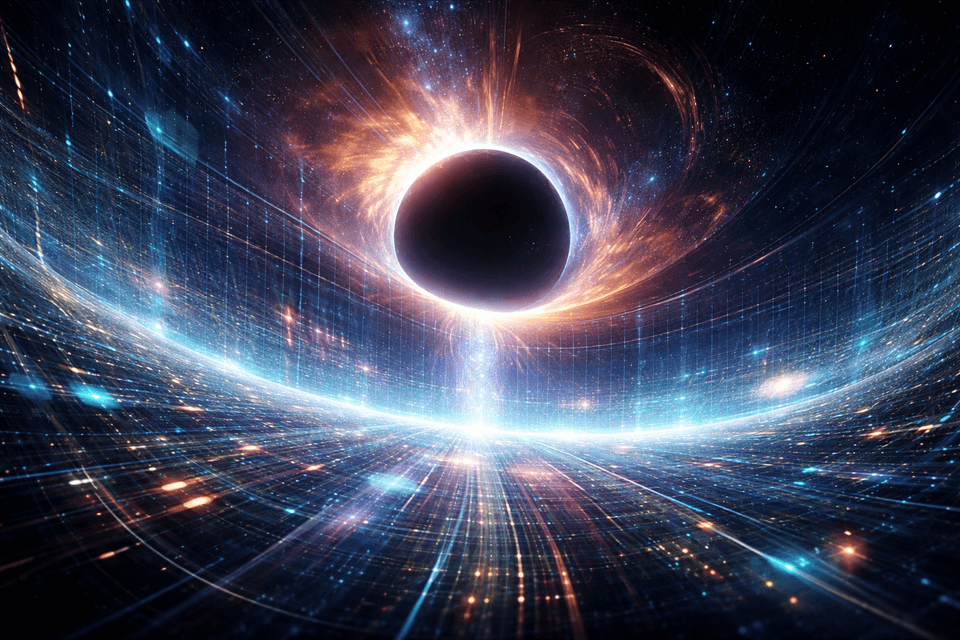
A philosophical walk through the holographic principle—how black holes hint that information scales with surface area, and what that might imply about emergence, time, and causality.
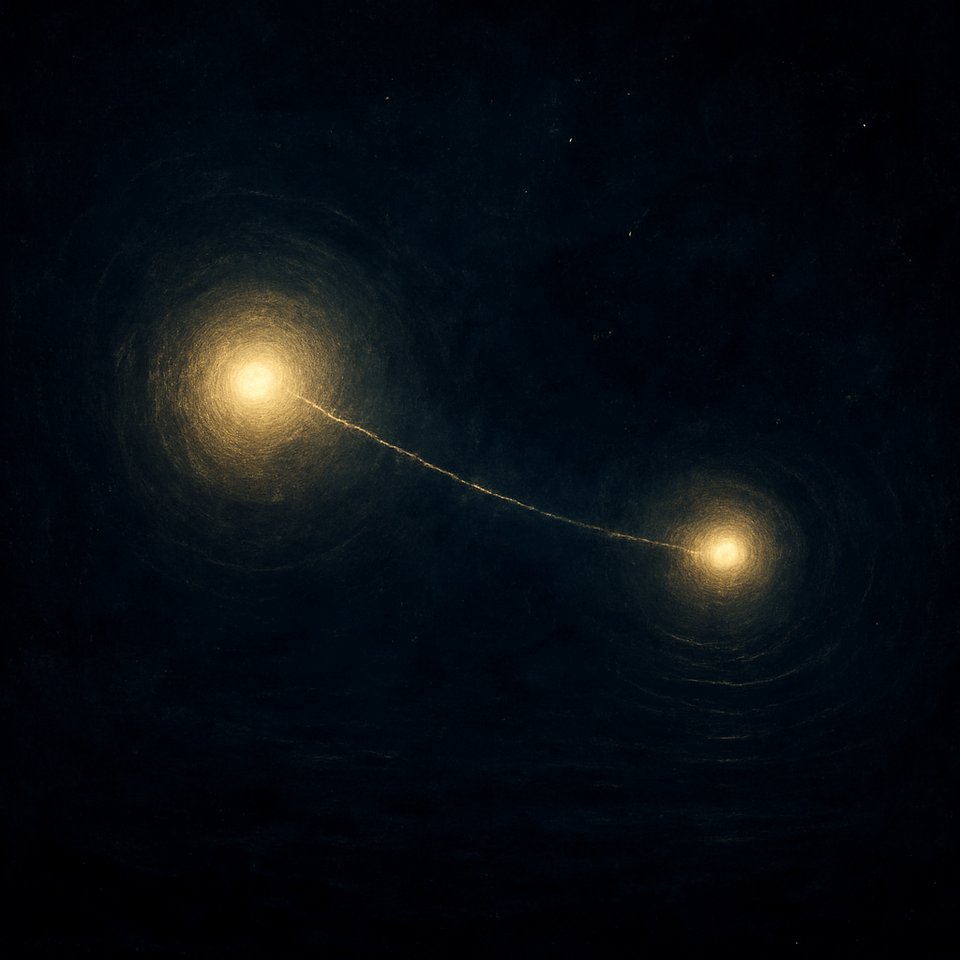
If time is not a river or a dimension but only the distance between events, what then becomes of us? Is a life measured by years, or by the density of change it contains? This essay traces the haunting question of time—not to answer it, but to wander through its puzzles: the minus sign in the line element, the ghost of dt, antimatter’s supposed reversal, and the possibility of a physics without clocks. Time appears less as something we move through and more as something we ourselves measure—a spacing of events that refuses ever to be final.
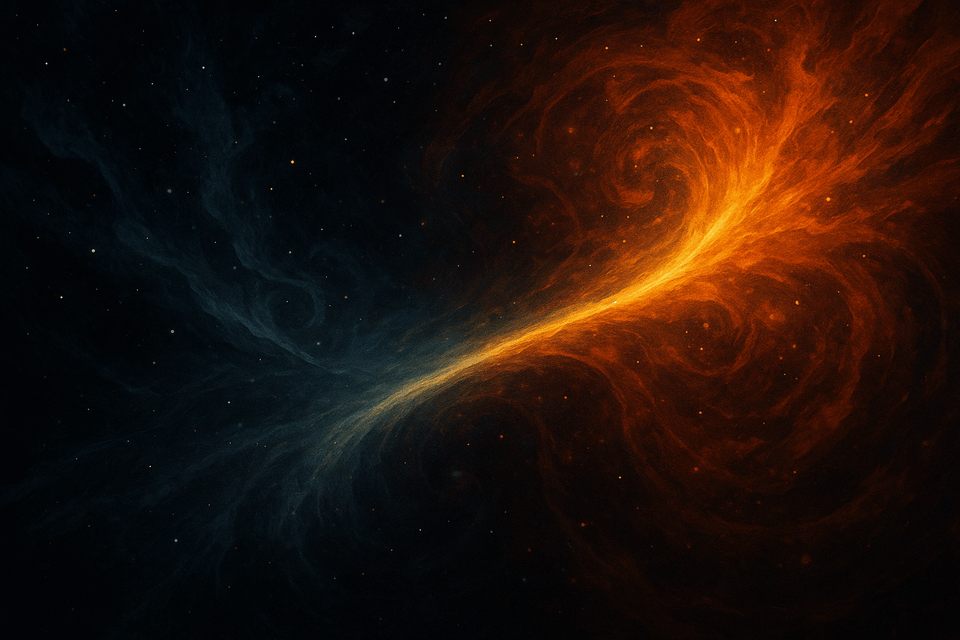
Why does our universe exist in matter, when physics tells us it should have been born in perfect balance with antimatter? From CPT symmetry to Feynman’s vision of particles moving backward in time, from Penrose’s maps of spacetime to Hawking’s idea of imaginary time, the mystery deepens. This essay explores a radical possibility: that antimatter was never lost, but displaced into a shadow universe, unfolding along a different rhythm of time. Could this hidden twin still whisper across the folds of spacetime — perhaps even reaching from tomorrow into today?
